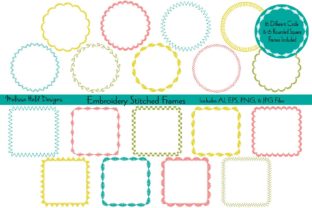
Reviewing Embroidery Stitched Frames for Real Projects
As a designer who spends half my life staring at digitized files and the other half watching needles punch through fabric, I have learned to be skeptical of "cute" graphics. We all know that what looks charming on a screen can sometimes turn into a tangled mess of thread breaks and puckering on the hoop. However, when I first opened the Embroidery Stitched Frames collection by Melissa Held Designs, I noticed something different. These are not just standard borders; they are a curated set of 32 hand-drawn illustrations that genuinely mimic the imperfect, organic feel of actual needlework.
The retro-inspired palette and loose, sketchy lines create an immediate sense of warmth. For those of us running a craft business or selling on Etsy, this aesthetic is gold. It bridges the gap between digital precision and the handmade product appeal that customers crave. But does it hold up under the needle? I decided to put these graphics to the test in a real-world scenario to see if they belong in your commercial embroidery library.
The Tote Bag Test: A Real-World Scenario
To evaluate the practicality of these frames, I chose a project that is both popular and unforgiving: a custom canvas tote bag. Tote bags are a staple for small shop products, but the thick, textured fabric can distort delicate designs. I selected one of the rectangular frames from the collection, aiming to use it as a border for a personalized monogram.
My goal was to create a boutique-style item that felt less like mass-produced merchandise and more like a thoughtful, personalized gift. The frame’s irregular edges were perfect for this. Unlike rigid geometric borders that highlight every slight misalignment in hooping, the Embroidery Stitched Frames embrace a bit of chaos. When stitched out, the design looked intentional and artistic rather than flawed. The customer reaction to such a piece is usually one of appreciation for the "handmade" vibe, even though it was produced efficiently via machine embroidery.
Visual Appeal and Stitching Clarity
One of the strongest assets of this collection is its visual personality. In the world of Illustrations and Graphics, many stitch frames suffer from being too dense or too vague. These frames strike a balance. They use a mix of running stitch and simulated satin stitch effects that read clearly from a distance but offer intricate detail up close. This duality is crucial for brand consistency. Whether you are creating embroidered patches for a local cafe or adding decorative accents to baby clothes, the design remains legible and attractive.
The retro color palette suggested in the preview images works well, but as a reviewer, I must advise you to test thread colors against your specific fabric texture. On dark fabric, lighter threads pop beautifully, enhancing the sketch-like quality. On light fabric, you might need to increase the stitch density slightly or choose a contrasting thread to ensure the frame doesn't disappear. I found that using a matte cotton thread rather than shiny rayon enhanced the vintage, hand-drawn aesthetic significantly.
Navigating Fabric and Hoop Constraints
While these designs are versatile, they are not without their limitations. Experienced embroidery designers know that not every file works everywhere. Here is where you need to exercise caution:
- Small Hoop Sizes: Some of the more intricate frames may lose definition if scaled down too much for a 4x4 hoop. Always check the minimum size recommendation before shrinking the design.
- Stretchy Fabric: Using these frames on sweatshirt embroidery or baby onesies requires a robust stabilizer. The open nature of some stitch patterns means the fabric underneath can show through if not properly supported.
- Curved Surfaces: Applying these to caps or hats can be tricky. The flat perspective of the hand-drawn style might distort on highly curved surfaces unless you adjust the pull compensation or choose a simpler frame from the set.
- Dense Stitch Areas: If you plan to fill the center of the frame with text or another graphic, ensure there is enough negative space. Overcrowding the center can lead to thread breaks and a bulky finished product.
For items like kitchen towels or aprons that undergo frequent washing, I recommend testing the stitch density on scrap fabric first. You want to ensure the frame holds its shape after multiple wash cycles without pulling or distorting the surrounding material.
Commercial Viability and Brand Value
For Etsy sellers and creative entrepreneurs, the value of Embroidery Stitched Frames extends beyond aesthetics. It impacts buyer engagement. In a saturated market, products that look unique stand out. These frames allow you to create custom apparel and home decor items that feel bespoke. Whether you are designing a holiday embroidery piece for Christmas ornaments or a wedding gift featuring a couple's initials, the frame adds a layer of professionalism and care.
Moreover, these graphics are excellent for digital product previews. If you sell printable mockups or digital embroidery files, using these frames in your marketing images can elevate your brand perception. They signal to potential buyers that you understand current design trends and value high-quality assets.
Practical Designer Notes
Before you integrate these into your workflow, keep these practical tips in mind:
- Check Licensing: Always confirm the license terms provided by Melissa Held Designs. Ensure you are compliant for both personal and commercial projects, especially if you are selling finished items or digital products.
- Test on Scrap: Never run a new design directly on your final garment. Test on similar fabric weight and texture to gauge stitch density and thread tension.
- Contrast is Key: Review your design in black and white mockups. If the frame disappears in grayscale, it will likely lack impact when stitched. Adjust thread colors accordingly.
- Stabilizer Selection: Match your stabilizer to the fabric. Cut-away stabilizer is often best for stretchy fabrics like t-shirts, while tear-away may suffice for stable woven cottons like tote bags.
- File Compatibility: Verify that the digital embroidery file formats provided match your machine’s requirements. While most modern machines accept common formats, double-checking prevents last-minute conversion headaches.
In conclusion, Embroidery Stitched Frames is a solid addition to any designer’s toolkit. It offers a genuine handmade feel that resonates with today’s consumers who value authenticity. By understanding its strengths and respecting its limitations regarding fabric and hoop size, you can create stunning, professional-quality items that enhance your craft business and delight your customers.